How to Build an IDX Website That Generates Listings on Autopilot
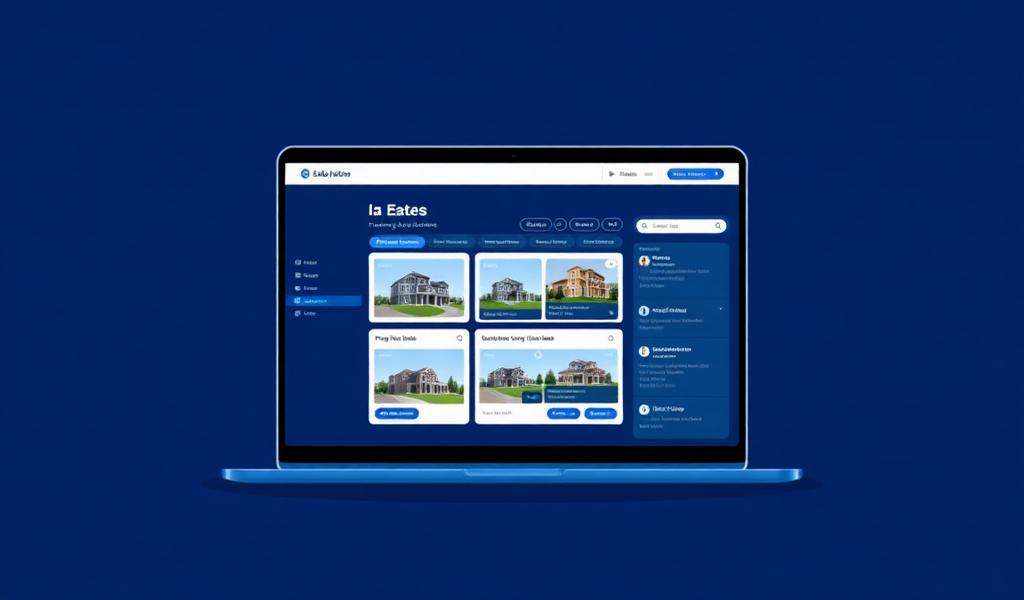
Most agent websites are digital business cards. They have your headshot, your phone number, a generic "About Me" section, and maybe a property search widget buried three clicks deep. They look fine. And they generate almost zero leads.
NAR reports that 97% of homebuyers use the internet during their home search, but only 5% of agents' websites actually capture meaningful lead information. That's a staggering gap between opportunity and execution.
An IDX (Internet Data Exchange) website with MLS search functionality changes the equation. When built right, it becomes your most productive team member — capturing, qualifying, and nurturing leads around the clock.
Your website isn't a brochure — it's a 24/7 salesperson that never takes a day off.
What Makes an IDX Website Different
A standard website says "here's who I am." An IDX website says "here's what you're looking for." The difference is everything.
IDX integration pulls live MLS listings directly into your website, allowing visitors to search properties just like they would on Zillow or Realtor.com — except now they're on YOUR site, building a relationship with YOUR brand.
Realtor.com research shows that consumers who search listings on an agent's website are 3× more likely to contact that agent compared to those who find the agent through a portal. Why? Because they've already spent time on your platform. They've seen your content. They trust you before you've even spoken.
Lead Capture: The Registration Strategy
Here's where most agents get nervous: requiring registration. "Won't I lose visitors?" Maybe some. But the ones who register are 10× more qualified than anonymous browsers.
The smart approach is progressive capture:
• First 3-5 listings viewed: No registration required (build trust first) • After 5 listings: Soft prompt — "Save your favorites? Create a free account" • Saved search feature: Requires email — "Get alerts when new listings match your criteria" • Market reports: Gated content — "Enter your email for the full [City] Market Report"
Zillow Research data shows that registered users on real estate websites view 4.7× more listings and return 3.2× more often than anonymous users. Registration isn't a barrier — it's a filter for serious prospects.
SEO: Getting Found Without Paying for Ads
Your IDX website is a content goldmine if you use it right. Every listing page is a potential Google search result. Every neighborhood page can rank for local searches.
High-impact SEO strategies for agent websites:
• Create dedicated neighborhood pages ("Homes for Sale in [Neighborhood], [City]") • Write monthly market update blog posts targeting "[City] housing market [Year]" • Optimize listing descriptions with location-specific keywords • Build community pages highlighting schools, restaurants, parks, and commute info • Get backlinks from local businesses, chambers of commerce, and community organizations
Mortgage News Daily research indicates that real estate-related searches have grown 22% year-over-year, with hyper-local searches ("homes for sale near [specific location]") growing fastest. Your website can capture this traffic — but only if Google can find it.
Conversion Optimization: Turning Visitors Into Appointments
Traffic without conversion is just expensive vanity metrics. Here's what converts:
• Clear calls-to-action: Every page should have one obvious next step • Home valuation tools: Sellers want to know what their home is worth — give them an instant estimate in exchange for contact info • Chat widgets: Real-time engagement captures leads who would otherwise bounce • Testimonial placement: Social proof on every landing page increases conversion by up to 34% • Mobile optimization: Redfin data shows 62% of property searches happen on mobile. If your site isn't flawless on a phone, you're losing the majority of your traffic
Keeping Current Matters emphasizes that consumers want to feel confident before reaching out. Your website should answer their top questions before they even have to ask.
Analytics: Know Your Numbers
You can't improve what you don't measure. Essential website metrics:
• Monthly unique visitors: How many people find you? • Bounce rate: Are visitors staying or leaving immediately? (Target: under 50%) • Registration conversion rate: What percentage of visitors register? (Target: 3-5%) • Lead-to-appointment rate: How many registered leads become appointments? (Target: 10-20%) • Top landing pages: Which pages attract the most visitors? • Search terms: What are people searching for on your site?
Altos Research recommends that agents review website analytics weekly and adjust content based on what's performing. A blog post that gets 500 views but zero leads needs a better CTA. A neighborhood page with high traffic and high bounce rate needs better content.
The Bottom Line
Your IDX website should be your hardest-working team member — capturing leads, building relationships, and nurturing prospects 24/7. The formula is straightforward: live MLS search + smart lead capture + SEO content + conversion optimization + consistent analytics review. Most agents have a website. Top producers have a lead generation engine.
Your Action Checklist
- Ensure your website has IDX/MLS search integration
- Implement progressive lead capture (don't gate everything immediately)
- Create dedicated pages for your top 5 target neighborhoods
- Add a home valuation tool for seller lead capture
- Optimize for mobile — test your site on 3 different phone sizes
- Publish at least 2 SEO-optimized blog posts per month
- Add clear calls-to-action on every page
- Review analytics weekly — track visitors, registrations, and conversions
- Set up automated email sequences for registered website leads
Not sure if your website is pulling its weight? The PRIME team can audit your current site and show you exactly where you're leaving leads on the table. Let's build a website that actually earns its keep.
We use AI to plan and augment our original ideas, content and training methods. All articles are original artifacts which may have used some aspect of AI to augment research or edit for cohesiveness, grammar and vocabulary and create graphics. We believe in leveraging the right tools for the right job at the right time as the right message, when curated properly, carries the most value. - written by a human...