Why Most CRMs Fail Agents (and How PRIME Fixes It)
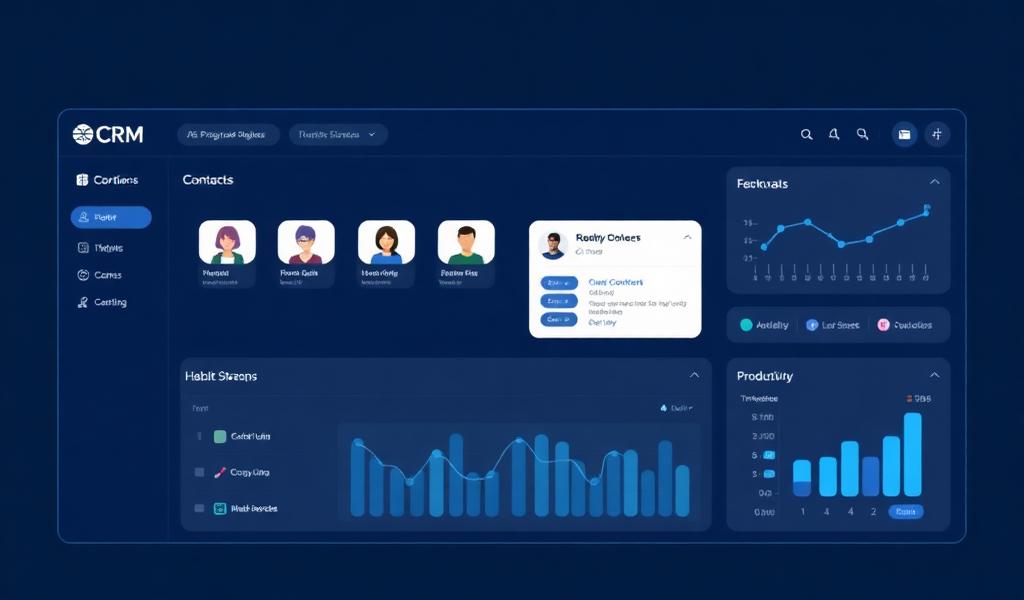
If you've been in real estate for more than five minutes, you've probably bought — and abandoned — at least one CRM. Maybe two. Maybe five. You're not alone. Industry research from RealTrends shows that nearly 63% of agents who purchase a CRM stop using it within 6 months.
The problem isn't you. It's the CRM. Most platforms were built by software engineers who've never held an open house or talked a seller off the ledge at 11 PM. They're designed to store data, not build habits. And in real estate, habits are everything.
Your CRM shouldn't feel like homework. It should feel like a cheat code.
The Data Graveyard Problem
Here's what happens with most CRMs: You import 500 contacts. You maybe tag a few of them. You set a couple of follow-up reminders. Then life happens — a listing goes live, a buyer gets cold feet, your kid has a soccer game — and suddenly your CRM is just a really expensive address book.
NAR research confirms that the average agent has over 400 contacts in their database but actively communicates with fewer than 50 regularly. That means 87% of your network — people who know you, trust you, and might refer you — are sitting in digital purgatory.
The CRM didn't fail because it couldn't store data. It failed because it didn't help you do anything with it.
Habit-Based vs. Task-Based: The Key Difference
Traditional CRMs are task-based: "Call John on Tuesday." "Email list of prospects." "Update pipeline." These tasks pile up and become overwhelming.
A habit-based CRM flips the script. Instead of giving you a task list that grows faster than you can check it off, it builds daily rhythms into your workflow. Think of it as the difference between a personal trainer and a gym membership. The gym has all the equipment, but the trainer makes sure you actually show up and do the right exercises.
PRIME Flow is built on this principle. Every morning, you see exactly who to call, what to say, and why they matter — based on relationship data, engagement signals, and pipeline position. No decision fatigue. No scrolling through lists. Just action.
Pipeline Visibility That Actually Helps
Most CRM pipelines look like a bunch of colored boxes. Pretty, but useless. You need to know: Which deals are at risk? Who hasn't been contacted in 14+ days? Where is revenue concentrated?
Redfin data shows that agents who review their pipeline weekly close 31% more transactions annually than those who check in monthly or less. But you can only review what you can see clearly.
A well-designed pipeline view shows you revenue projections, stalled deals, and exactly which actions will move the needle today. Not tomorrow, not next week — today.
The Follow-Up Cadence Secret
Keeping Current Matters reports that consumers work with the first agent who provides value — not necessarily the first one who reaches out. That's an important distinction.
A great CRM doesn't just remind you to follow up. It helps you follow up with something relevant. Market update for a buyer in a specific neighborhood. Just-listed alert for someone who's been watching inventory. Anniversary of their home purchase with a home value update.
This is where PRIME's AI tagging and smart segmentation shine. Every contact is automatically categorized by stage, interest level, and last interaction — so your follow-up is always contextual, never generic.
Integration: Your CRM Should Play Nice
If your CRM doesn't connect to your email, your calendar, your transaction management, and your marketing tools, you're manually entering data. And manual data entry is where CRM adoption goes to die.
HousingWire's proptech survey found that agents using integrated tech stacks (CRM + marketing + transaction tools in one platform) save an average of 8.5 hours per week compared to agents juggling standalone tools. That's a full workday, every single week.
PRIME Flow connects your contacts to your closings, your marketing to your pipeline, and your daily habits to your annual goals. One login. One system. Zero excuses.
The Bottom Line
The CRM graveyard is full of platforms that promised to change your business but ended up as glorified Rolodexes. The difference between a CRM that works and one that doesn't isn't features — it's philosophy. Habit-based systems that guide your daily actions, provide contextual follow-up prompts, and integrate with your full workflow are the ones that actually drive production. Stop blaming yourself for CRM failure. Start using a system built for how agents actually work.
Your Action Checklist
- Audit your current CRM usage — how many contacts have you communicated with in the last 30 days?
- Identify your top 50 relationships and ensure they're tagged and prioritized
- Set up a daily CRM habit: 15 minutes every morning reviewing your action items
- Eliminate manual data entry by connecting your email and calendar
- Create follow-up templates for 5 common scenarios (new lead, post-showing, anniversary, etc.)
- Review your pipeline weekly — flag any deal that hasn't had activity in 10+ days
- Track your contact-to-conversion ratio monthly to measure CRM effectiveness
Tired of CRMs that collect dust? The PRIME team can show you a system built around daily habits, not endless tasks. Reach out and we'll walk you through how agents are using PRIME Flow to actually grow their pipeline — and enjoy the process.
We use AI to plan and augment our original ideas, content and training methods. All articles are original artifacts which may have used some aspect of AI to augment research or edit for cohesiveness, grammar and vocabulary and create graphics. We believe in leveraging the right tools for the right job at the right time as the right message, when curated properly, carries the most value. - written by a human...